
Welding, cutting, and other hot work operations throw off sparks and molten slag that can travel much farther than most people assume, and those stray sparks are a leading cause of workplace fires. Federal safety regulations recognise this risk directly, requiring a dedicated fire watch whenever conditions suggest that more than a minor fire could develop. Understanding when that requirement applies, and what the fire watch is actually expected to do, is essential for any employer that performs hot work on a routine basis.
For workplaces that regularly perform welding, grinding, or cutting, arranging hot work fire watch Ontario coverage can provide an added layer of protection when combustible materials or hidden fire hazards cannot be fully eliminated. A dedicated fire watch can monitor nearby areas for sparks, smoke, and signs of smouldering while hot work is underway, helping workers respond quickly if a small ignition occurs. This focused monitoring is particularly valuable in active construction zones, industrial facilities, and other environments where hot work may expose surrounding materials to elevated fire risks.
When a Fire Watch Is Required
Under the general industry welding and cutting standard, a fire watch becomes mandatory when combustible materials sit within thirty-five feet of the work and cannot be removed or shielded, when materials beyond that distance could still be ignited by flying sparks, or when wall and floor openings within that radius could let sparks reach hidden combustibles on the other side. The thirty-five-foot figure is often misunderstood as a clearance zone that must always be achieved, when in practice it is the trigger distance that determines whether a fire watch is needed at all.
Duties Before and During Hot Work
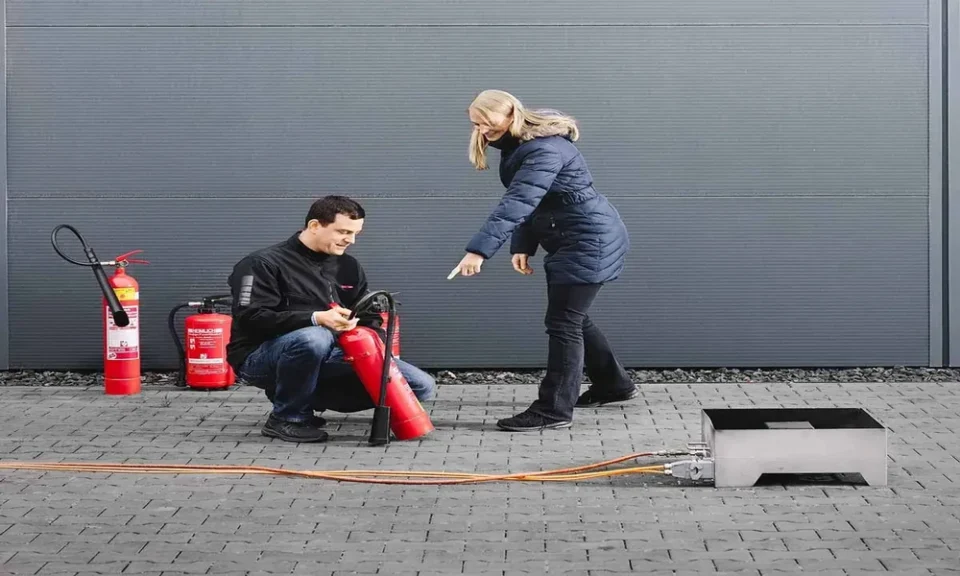
Before any torch is lit, the area is supposed to be inspected and authorised, often through a written hot work permit that documents what precautions have been taken. Once work begins, the fire watch is responsible for continuously scanning the surrounding area, including spaces that are not directly visible, for sparks, smoke, or smouldering material, and must have suitable extinguishing equipment on hand and know how to use it.
Training and Equipment
Fire watch personnel are expected to be familiar with the specific hazards of the site, know how to sound an alarm, and understand the limits of their own authority, meaning they should attempt to extinguish only fires that are clearly within the capacity of the equipment they are carrying and otherwise raise the alarm immediately. A fire watch assigned during hot work is not permitted to take on other duties at the same time, since divided attention defeats the purpose of the role.
The Post-Work Watch Period
The obligation does not end the moment the welding stops. Regulations require the fire watch to remain in place for a minimum of thirty minutes after hot work is completed, since smouldering material can ignite well after visible sparking has ceased. Many organisations extend this window to a full hour to align with industry fire codes or insurance requirements, particularly on sites where combustibles could not be fully cleared from the work area.
Conclusion
Fire watch coverage during welding and cutting is one of the most concrete ways hot work fires get prevented before they start. By clearing or shielding combustibles, keeping a trained set of eyes on the work area throughout the job, and staying alert for a period after the torch is set down, a fire watch closes the gap between a routine hot work task and a costly, avoidable fire.
